A 2026 Guide to Cape Town Airport (CPT)
Updated: September 30, 2026
Cape Town International Airport (CPT) is the main gateway to Cape Town and the Western Cape province. Its connected terminal complex serves domestic and international flights, with transport into the city available by taxi, ride-hailing service, shuttle, rental car, or pre-booked private Cape Town Airport transfer.
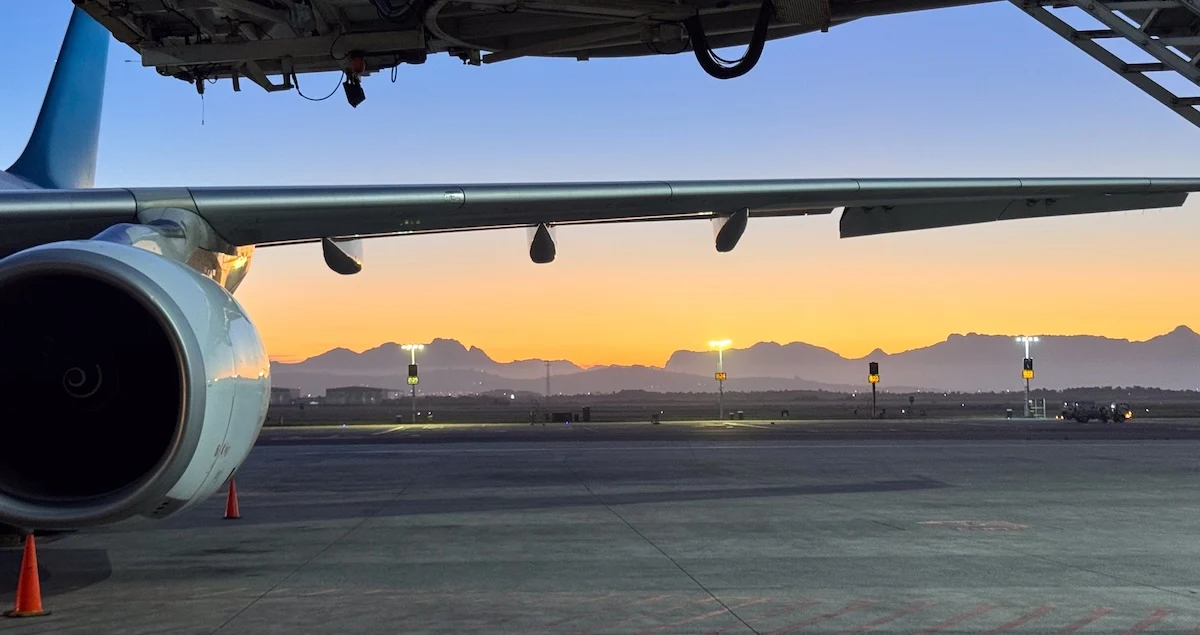
Cape Town is the city that has it all: incredible nature, a bustling social scene, and huge business potential.
As your gateway to the “Mother City”, the multi-award-winning Cape Town International Airport (CPT) connects millions of global travelers to the iconic city and surrounds each year.
Set against the backdrop of Table Mountain, CPT combines modern infrastructure with a single, walkable terminal design that helps keep navigation straightforward.
Whether arriving for a holiday, navigating a domestic transfer, or departing after a business trip, understanding how CPT operates will ensure your Cape Town trip meets expectations.
Cape Town Airport at a glance
Official name: Cape Town International Airport
IATA Code: CPT
Location: Matroosfontein, Cape Town
Distance to city center: Approximately 20 kilometers (12 miles) east of central Cape Town
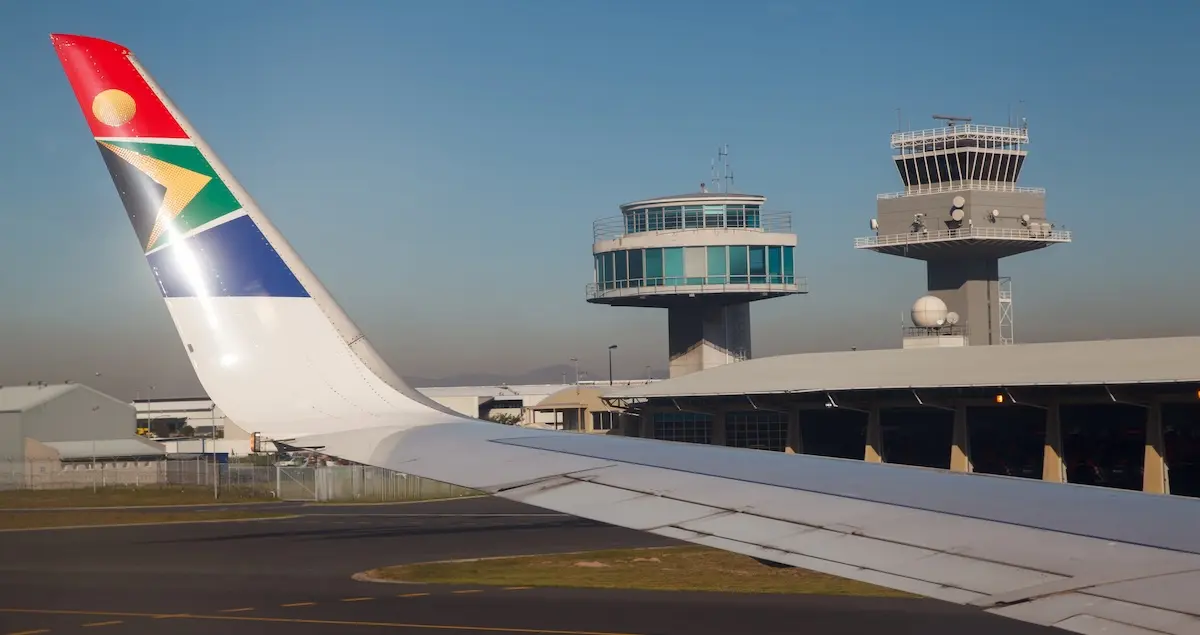
Terminal structure: A single main terminal building layout (Central Terminal Building) linking domestic departures/arrivals on the south side with international departures/arrivals on the north side
Regional role: The primary international air hub for the Western Cape, serving as the main entry point for leisure and business travel across southern Africa
Where is Cape Town Airport?
Cape Town International Airport sits about 20 kilometers east of the City Bowl, the central area nestled between Table Mountain and Table Bay. Under clear traffic conditions, the drive into central Cape Town takes about 20 to 25 minutes. For most visitors, particularly those carrying luggage, traveling by road in a pre-arranged vehicle or ride-hailing car is the best option.
Traffic tips: Traffic density varies significantly throughout the day. Morning peak hours (06:30 to 09:00) heading toward the city center and late afternoon peak hours (15:30 to 18:30) heading toward the airport can stretch travel times to 45 minutes or longer. When planning for departure transfers, allow a generous buffer for peak-hour road congestion on the N2.
How to get from Cape Town Airport to Cape Town
Selecting ground transport depends on budget, group size, time of day, and luggage volume.
Some guides might mention minibus taxis, the most common public transport in South Africa, but we’d recommend against it. Routes can be difficult for newcomers to navigate, vehicles can be crowded, and driving standards vary considerably
Pre-booked chauffeur: A driver meets you directly inside the arrivals hall with a name board, manages heavy luggage, and provides direct door-to-door transit to your destination via a private executive vehicle. Ideal for corporate travelers, families, or late-night arrivals. You can secure a seamless ride using a dedicated Cape Town car service or book a dedicated Cape Town chauffeur service.
Ride-hailing (Uber): Uber is widely used in CT. Pickups take place at designated zones outside the main terminal. Wait times fluctuate based on driver availability, and surcharges apply during peak demand hours.
Rental cars: Rental agency desks are located in the dedicated transport plaza across from the main terminal entrance, reached via covered walkways.
Cape Town Airport terminal overview
CPT operates as a unified terminal complex, making transfers between sections straightforward.
Central Terminal Building (CTB): The central hub is the main connecting section between the domestic and international sides. It houses check-in and passenger facilities and makes the walk between the two parts of the airport straightforward.
Domestic Terminal (South Wing): Manages all domestic departures and arrivals. Reached via the south side of the Central Terminal Building.
International Terminal (North Wing): Handles all non-domestic flights, including international passport control, customs clearance, and duty-free areas.
Arrivals and the ground transport plaza: Located on the ground floor level. Arrivals step directly into the public greeting area, with immediate pedestrian access to rental cars, ride-hailing pickup zones, and shuttle pick-up areas.
Arrivals, departures, and connections
International arrivals
After disembarking, follow signs to Passport Control. Non-South African passport holders join the visitor lanes. Once immigration is complete, proceed to the baggage reclaim hall, retrieve your luggage, and clear Customs. Pass through the sliding doors into the main arrivals greeting area to meet your driver or ground transit.
Domestic arrivals
Domestic flights bypass passport control and customs. Passengers head straight to baggage reclaim on the ground level of the domestic wing, collect their bags, and exit directly to the transport plaza.
Check-in and security timings
International Departures: Arrive 3 hours prior to scheduled departure.
Domestic Departures: Arrive 1.5 to 2 hours prior to scheduled departure.
Connecting flights
Domestic to Domestic: If your flights are on one itinerary and your baggage is checked through, follow your airline's transfer instructions and airport signage. Passengers on separate tickets may need to collect baggage and check in again.
Domestic to International: Collect checked luggage if not through-checked, exit to the main terminal, re-check bags at the international counter, and clear passport control.
International to Domestic: Clear passport control, retrieve luggage, clear customs, and proceed up to the Central Terminal check-in counters to re-check luggage for your domestic leg. Minimum connection times should be verified directly with your airline and Airports Company South Africa (ACSA).
Airlines flying from Cape Town Airport
Cape Town International Airport hosts major local, regional, and long-haul carriers.
Domestic carriers: FlySafair, Lift, South African Airways, Airlink, CemAir.
Regional and African carriers: Airlink, Kenya Airways, Ethiopian Airlines, RwandAir.
International carriers: British Airways, Emirates, Qatar Airways, Lufthansa, KLM, United Airlines, Delta Air Lines, Turkish Airlines.
Note: Airline operational assignments and seasonal schedules change frequently. Check with your specific carrier before departure.
Lounges at Cape Town Airport
Both international and domestic wings feature premium lounge facilities tailored to class of travel, loyalty status, or paid entry.
Bidvest Premier Lounge (domestic and international): Operated in both domestic and international wings, these lounges act as the most accessible paid options at CPT. Accessible to Priority Pass, DragonPass, and SkyTeam members, as well as walk-in pay-per-use guests, they provide hot and cold food buffets, full beverage service, high-speed Wi-Fi, work desks, and shower facilities.
SLOW Lounge (domestic): Part of an exclusive local network affiliated with First National Bank (FNB) and Rand Merchant Bank (RMB). Known for high-end interior design, freshly prepared chef-made meals, full barista bars, and private quiet spaces. Day passes are not sold here; entry is strictly reserved for qualifying bank clients or partner cardholders.
The Lounge by SAA and Discovery Bank (domestic): A modern facility found in the domestic airside terminal. Serving South African Airways premium passengers and top-tier Discovery Bank cardholders, it offers floor-to-ceiling runway views, quiet workspaces, and premium dining options.
British Airways Lounge (international): Positioned airside near Gate A3, this space serves British Airways Club World passengers and eligible Club World status cardholders. It provides dedicated business centers, self-serve champagne and spirit bars, and light dining.
For more strategies on lounge access, read how to gain airport lounge access anywhere or explore 8 of the best airport lounges in the world.
Restaurants, Shopping, and Amenities
Cape Town International Airport offers a balanced mix of sit-down dining, casual cafes, and fast-food outlets, as well as specialized retail both before and after security.
Sit-down and family dining: For passengers looking to settle in for a complete meal before security, landside options in the Central Terminal Building include Mugg & Bean, a lunch and coffee spot known for all-day breakfasts and bottomless coffee, or Spur Steak Ranch, a South African classic that is famous locally for its burgers, ribs, and family-friendly seating.
Quick-service and fast food: Travelers pressed for time will find a variety of fast-casual choices landside and airside. McDonald's operates in the main arrivals hall, while Wimpy offers classic breakfasts and burgers both before and after security. Fast choices include Mugg & Bean’s express outlet and Panarottis Pizza Express for hot pizza slices.
Coffee and healthy grab-and-go: Coffee lovers can visit local favorite Vida e Cafe for Portuguese-style espresso and pastries or Java Junction near the domestic gate area. Health-conscious travelers have Kauai, located airside, which serves fresh juices, smoothie bowls, and protein wraps.
Duty-free and retail: The international airside duty-free precinct features dedicated shops for South African wines, local gin, artisanal chocolates, luxury cosmetics, and safari-inspired leather craft goods. The domestic airside area houses travel convenience stores, newsagents, and apparel shops.
Wi-Fi: Free airport Wi-Fi is provided throughout all terminal areas by ACSA via timed session logins.
Baggage and financial services: Luggage wrapping kiosks, currency exchange counters, ATMs, and VAT refund processing offices are located on the departures level of the Central Terminal Building.
Smoking: ACSA lists a dedicated smokers’ lounge in the international departures area.
Hotels and layovers near Cape Town Airport
Because Cape Town International Airport is just 20 to 30 minutes from the city's main attractions, staying directly at an airport property is rarely necessary, even for an overnight layover.
Instead, we’d recommend you take advantage of being in Cape Town and stay where you can appreciate some of what the city has to offer. The short drive time makes it effortless to head straight into central Cape Town or along the Atlantic Seaboard.
You can check into iconic properties like Mount Nelson, A Belmond Hotel in historic Gardens, relax at oceanfront stays near Clifton Beach and Camps Bay, or enjoy dramatic coastal views at The Twelve Apostles Hotel and Spa tucked beneath the mountains.
Choosing a central or coastal location lets you experience Cape Town's world-class dining, beaches, and scenery without sacrificing convenient access for your return flight.
For travelers who prefer to remain as close to the terminal as possible, practical options are also available right on the airport perimeter:
On-site and nearby hotels: Properties such as Hotel Verde (a short walk or shuttle ride from the terminal) and Road Lodge Cape Town International Airport sit directly on airport grounds, offering convenient transit for quick turnarounds.
Short layovers (under four hours): Remain airside or inside the Central Terminal Building to utilize lounge amenities, dining, and Wi-Fi.
Extended layovers (over six hours): With a sufficiently long connection, leaving CPT can be worthwhile, particularly for the V&A Waterfront or another easily reached part of the city. Factor in immigration where applicable, road traffic, and the time required to return and clear security before deciding whether to leave the airport.
Learn more about making long transits stress-free with these guides on how to travel through any airport comfortably and how to make your airport experience stress-free.
Practical tips for the best CPT trip
Our local experts offer practical travel advice and airport etiquette tips to ensure the most comfortable trip.
Official airport porters: Inside the baggage reclaim area and near departures, if you need help with heavy luggage, use clearly identified airport porters and agree or confirm the costs before accepting assistance. Politely decline anyone without a uniform offering luggage help outside the official areas.
Handling unofficial drivers: As soon as you exit the secure arrivals sliding doors, you may be approached by aggressive touts offering private rides or taxi services. Ignore these solicitations entirely, as they often lead to overcharging or safety risks. Walk directly to the marked transport plaza for your pre-booked chauffeur, official metered taxi line, or dedicated Uber pickup zone.
Navigating local car guards: When you park on public streets or at open shopping centers around the city, you will encounter car guards wearing high-visibility vests. They watch your vehicle while you are away to deter crime and help you navigate tight spots. A tip of R10 to R20 is standard for a quick stop, and R20 is appropriate if they watch your car for a few hours while you dine. You pay them as you leave.
Handling hawkers: At traffic lights and around high-traffic tourist areas you may be approached by street hawkers selling crafts or asking for assistance. Keep your belongings secure, walk with purpose, and decline unwanted offers with a polite but firm "No, thank you" while continuing on your way.
Plan around N2 traffic: Peak traffic hours on the N2 highway significantly impact travel times between central Cape Town and CPT. Allow extra travel time during weekday rush hours (06:30 to 09:00 and 15:30 to 18:30) to ensure you do not risk missing your flight.
Keep small cash for tipping: While credit and debit cards are accepted at almost every airport shop and city venue, South Africa has a strong cash-tipping culture for informal workers. Keep a stash of small Rand notes (R10 and R20) tucked away for everyday interactions. And pro tip: Add a minimum 10 percent tip (more for especially good service) on top of the final amount at any restaurant or cafe.
Continuing beyond Cape Town: Winelands and the Whale Coast
Cape Town International Airport is also a practical starting point for journeys beyond the city itself. Travelers heading into the Winelands can continue directly toward Stellenbosch, Franschhoek, or Paarl, while those traveling east can head straight for Hermanus and the Whale Coast.
Winelands: Travelers heading out on tasting trips can arrange a Paarl to Cape Town private driver or book dedicated private driver wine tours.
Whale Coast Travel: If you are heading east toward the coast, pre-arrange a direct Cape Town to Hermanus chauffeur transfer to relax after a long flight and enjoy scenic views along the route.
For a smoother onward journey, pre-booked private transport removes the need to return to central Cape Town before continuing. Whether you’re planning a wine-focused stay, a coastal escape, or a multi-stop itinerary across the Western Cape, arranging your ground transport in advance will make your plans substantially easier.
The best way to continue your journey from Cape Town Airport

After a long flight, the last thing you want is to begin your Cape Town visit by navigating unfamiliar roads, waiting for a ride, or managing luggage across multiple transfers.
With a pre-booked Blacklane airport transfer, your professional chauffeur will meet you on arrival, assist with your bags, and take you directly to your hotel, meeting, or onward destination.
The same service can also support longer journeys into the Winelands or along the coast, giving you a comfortable, door-to-door way to begin your time in the Western Cape.
Start your Cape Town journey with less stress and more confidence, with Blacklane.
About the author

John Schärges
John Schärges is an internationally published journalist and award-winning copywriter with 15 years of experience, which includes covering global tourism events and serving as an editor for travel guides. He brings his passion for different cultures and over a decade of living abroad to his writing for Blacklane.