Beijing Daxing Airport Guide: Terminals, Transfers, and Layovers
Updated: September 04, 2026
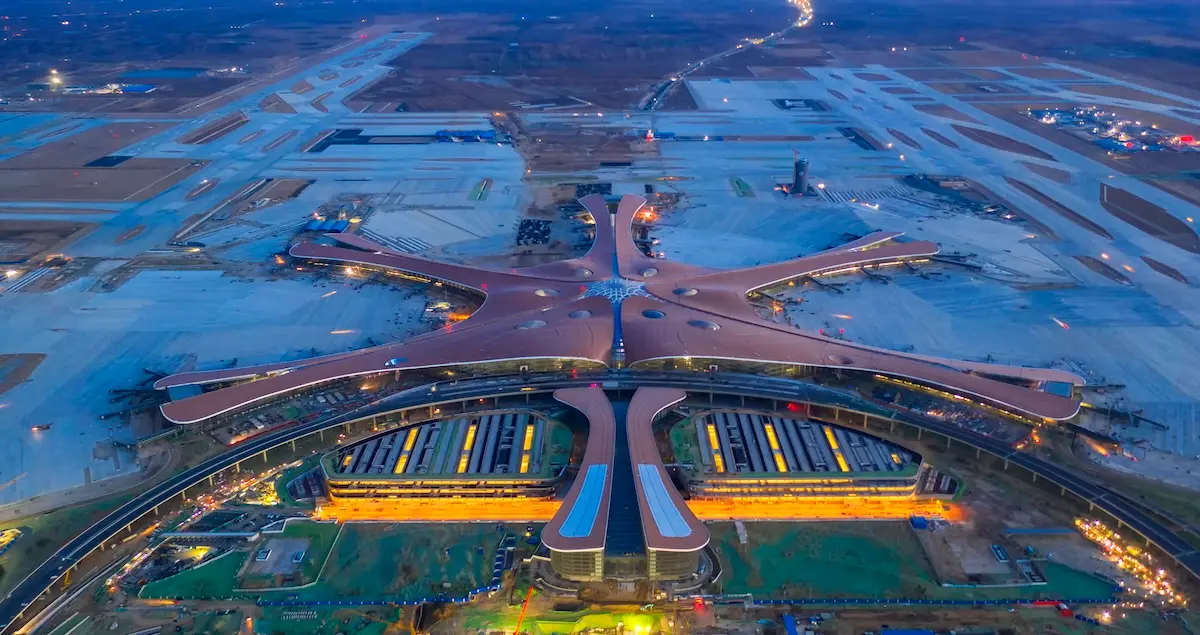
Beijing Daxing International Airport (PKX) is one of the world's most ambitious modern aviation hubs. Since opening in 2019, its distinctive starfish-shaped terminal has garnered acclaim, combining striking architecture with an unusually intuitive layout.
As a result, the airport is far easier to navigate than its enormous scale might suggest.
Located around 28 miles (46 km) south of central Beijing, Daxing also offers fast rail connections into the city, a growing international route network, and a host of passenger-focused technologies designed to streamline the journey.
But knowing whether you're flying through Daxing or Beijing Capital, how to reach the city, and what to expect during a connection can make a significant difference to your trip.
Understanding Beijing's two airports: Daxing vs Capital
When you're booking flights to China's capital, it's easy to assume all Beijing flights land at the same place. But in reality, Beijing is served by two massive international hubs: Beijing Capital International Airport (PEK) in the northeast and Beijing Daxing International Airport (PKX) in the far south. Knowing which airfield you're flying into makes a huge difference to your arrival logistics, driving distance, and train connections.
Beijing Capital Airport
Beijing Capital (PEK) is the older, established giant positioned about 19 miles (32 km) northeast of the city center. It's the main home for Air China and many long-standing legacy carriers. If you're comparing both hubs, check out our comprehensive guide to Beijing Capital International Airport (PEK) for a full breakdown of its multi-terminal layout.
Beijing Daxing Airport
By contrast, Beijing Daxing (PKX) opened in late 2019 as a state-of-the-art mega-hub designed to relieve pressure on Capital. It serves as the main hub for China Southern Airlines and China Eastern Airlines, along with an expanding list of international carriers such as British Airways, Qatar Airways, and Etihad Airways.
Positioned kilometers south of Tiananmen Square, Daxing is further from the classic city core than Capital, but its ultra-modern design and integrated transit hub mean getting through the terminal is considerably faster.
Which Beijing airport to choose?
If your meetings or hotel are in southern districts like Fengtai or Daxing, flying into PKX is actually more convenient than landing at PEK. However, if your destination is in the northern diplomatic quarter or Chaoyang business district, your drive from Daxing will take roughly 60 to 90 minutes depending on traffic. Always double-check your airport three-letter code (PKX vs PEK) before reserving your hotel or ground transport.
Choose Daxing if:
Your airline operates from PKX
You're staying in southern Beijing
You value integrated rail connections and a newer terminal
Choose Capital if:
Your flight operates from PEK
You're staying in northern/eastern Beijing
Your airline/network is centered there
While Capital remains a major hub with a different terminal layout and a long-established network of airlines and routes, Daxing is the more modern of the two, with a single-terminal design and integrated rail connections.
Beijing Daxing Airport at a glance
Recognized globally for its breathtaking architecture, Daxing regularly appears on lists of airports so beautiful you won't want to leave. Its radially symmetrical design looks like a glowing golden starfish from above, a shape chosen specifically to solve the long walking distances that plague other mega-airports.
Airport code: PKX
Location: Daxing District, south of Beijing (bordering Langfang, Hebei Province), 46 kilometers south of Tiananmen Square.
Terminal concept: Single terminal building with a central dome connecting five radiating concourses.
Primary hub airlines include: China Southern Airlines, China Eastern Airlines, XiamenAir, and Beijing Capital Airlines.
International airlines include: British Airways, Qatar Airways, Etihad Airways, Malaysia Airlines, Royal Air Maroc, Saudia, and more.
Navigation advantage: The radial design keeps walking distances relatively short for a terminal of its size, with the furthest gates positioned within a few minutes' walk of the central area.
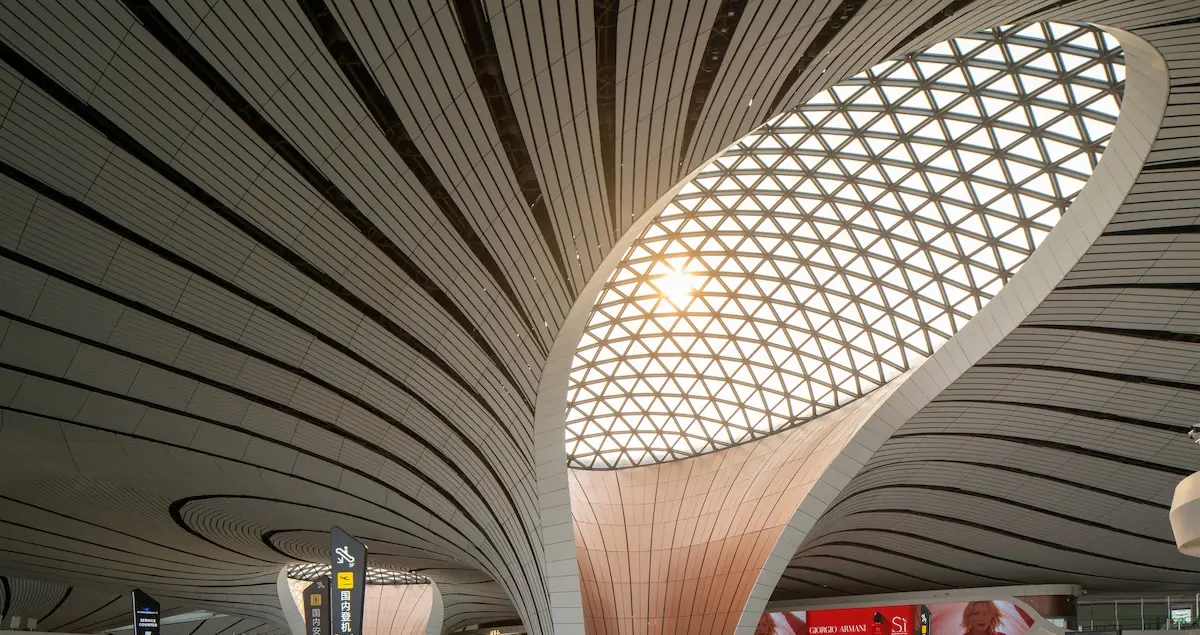
Because Daxing operates under a single vast roof rather than separate disconnected terminals, you'll never need to board a bus or train just to switch terminals for a connection. Everything is housed within one interconnected space, making PKX one of the easiest mega-hubs in Asia to navigate once you understand its multi-level floor logic.
Terminal and floor layout: What's on each level
Daxing's single terminal spans seven distinct levels, organized vertically to separate arrivals, departures, commercial areas, and ground transportation. The vertical layout means you'll move through levels via escalators and glass elevators rather than walking long distances.
Basement Level 2 (B2)
This is the lowest level of the airport, hosting the train platforms for the subway and rail networks. You'll arrive here if you take the Daxing Airport Express subway line or intercity high-speed trains.
Basement Level 1 (B1)
B1 acts as the main underground transit concourse. It houses train ticket counters, security checkpoints, and dedicated domestic check-in counters and bag drops. If you're traveling light on a domestic flight, you can check in right here before going up to the gate areas.
Level 1 (1F)
Level 1 contains international baggage claim and arrival facilities. Here you'll clear health quarantine, immigration, baggage claim, and customs inspection. It also features landside services including airport bus pick-up bays, long-distance coaches, and taxi pickup zones.
Level 2 (2F)
Level 2 handles domestic flight arrivals and domestic transfers. You'll find domestic baggage claim carousels here, along with entry points for online ride-hailing services, taxi drop-offs, hourly parking, and the entrance to the airside Aerotel transit hotel.
Level 3 (3F)
Level 3 serves domestic departures, particularly for premium passengers, including First and Business Class check-in zones for China Southern and China Eastern. It also houses security screening channels and airside access to domestic boarding gates.
Level 4 (4F)
Level 4 is the primary departures hall for all international flights and standard domestic check-in. This is where you'll find main airline check-in islands, international health control, customs inspection, security screening, and border exit controls.
Level 5 (5F)
Level 5 is a dining and viewing mezzanine overlooking the main departure hall. It's accessible to non-ticketed visitors and features classic Chinese dining options, including the famous Quanjude Roast Duck restaurant, alongside fast-casual eateries.
How to get from Daxing Airport to central Beijing
Choosing the right transport option depends on your final destination in Beijing, how much luggage you're carrying, and what time your flight lands.
Here are the most common ways to travel into the city:
Private chauffeur transfer

After a long international flight, navigating public transit or waiting in long taxi queues is the last thing you need, especially if you have a meeting to keep.
Pre-booking a private Beijing chauffeur service is the most comfortable and reliable way to reach your destination – on time. Your driver tracks your flight in real time, meets you inside the arrivals hall with a personalized name sign, helps with your luggage, and escorts you straight to a premium, climate-controlled vehicle. It's the ideal choice for business travelers, families, or anyone landing with multiple bags or late at night.
Daxing Airport Express Train
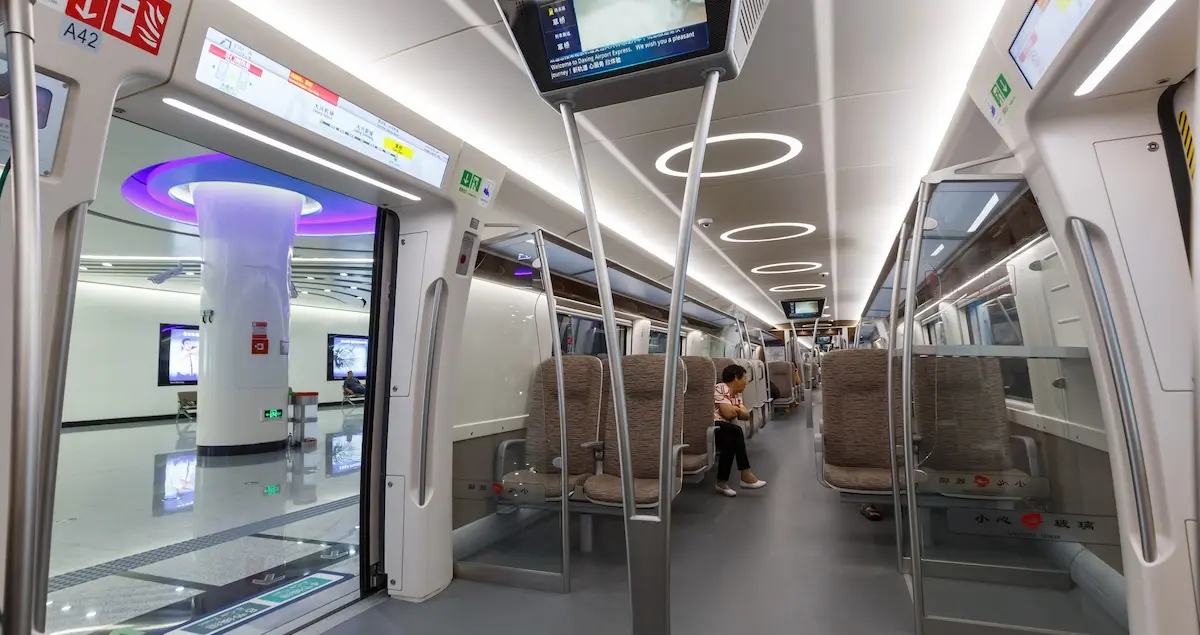
The Daxing Airport Express is a high-speed driverless subway line connecting the airport to Caoqiao Station in southern Beijing.
Travel time: 19 minutes from B1 level to Caoqiao Station.
Operating hours: Trains run frequently from early morning until late evening.
Cost: Standard single fare is 35 RMB, while a First Class ticket costs 50 RMB.
Connection: At Caoqiao Station, you can transfer to Beijing Subway Line 10 and Line 19 to reach business districts or transfer toward central landmarks.
Best for: Solo travelers or light packers seeking the fastest way into southern Beijing during peak road traffic hours.
Beijing–Xiongan Intercity Railway
For travelers heading to Beijing West Railway Station or southern technology hubs, the intercity high-speed train is an excellent alternative.
Travel Time: Around 20 to 30 minutes to Beijing West Railway Station, depending on the service.
Best For: Passengers connecting directly to China's high-speed rail network or staying near Beijing West.
Taxis and local ride-hailing
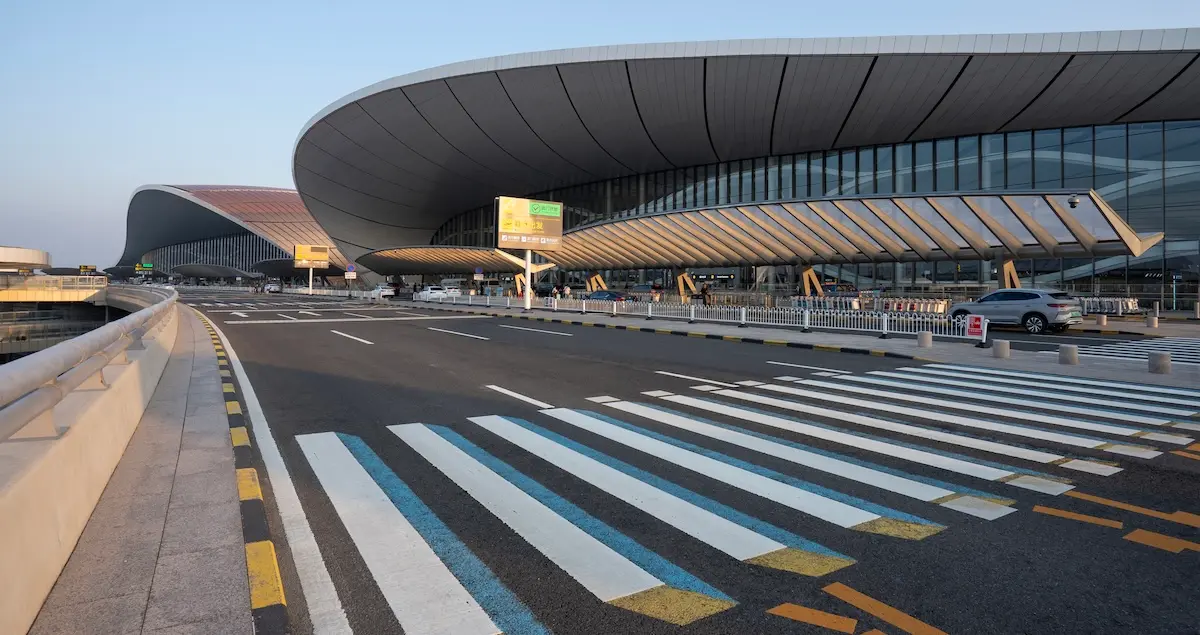
Taxi pickup is outside 1F, while ride-hailing services pick up on 2F.
Travel Time: 60 to 90 minutes to central locations like Tiananmen, Chaoyang, or Wangfujing.
Cost: Typically 180 to 280 RMB including toll fees, depending on traffic and exact distance.
Considerations: Taxi queues can be long during peak international arrival banks, and drivers rarely speak English. It's essential to have your destination address written in Chinese characters.
Transfers, self-transfers, and layover logistics
Daxing was built from the ground up as a high-efficiency transfer node, offering seamless connections for both international and domestic itineraries.
Domestic-to-domestic transfers
If your bags are checked through to your final destination, domestic transfers at PKX are exceptionally swift. You'll follow the transfer signs on Level 2 directly to your next gate without leaving the secure area or clearing security again.
International transfers and visa-free transit
If you're transiting between international flights or entering China under an applicable visa-free transit policy, follow the international transfer signs. Eligible travelers using the 240-hour visa-free transit policy can apply for a temporary entry permit at immigration. Ensure you have your passport and confirmed onward ticket ready, and check the latest eligibility requirements before travel.
Self-transfer baggage service
For eligible self-transfer passengers connecting onto domestic flights, Daxing offers a baggage-carrying service that allows airport staff to retrieve and re-check your luggage while you remain within the secure area. Check the airport's current eligibility requirements when you arrive.
China Southern 15-minute boarding
If you're flying domestically with China Southern without checked baggage, Daxing's 15-Minute Boarding service provides an expedited route through check-in and security for eligible passengers, supported by dedicated lanes and rapid transport to the gate.
What to do on a layover in PKX: Lounges, dining, shopping, and amenities
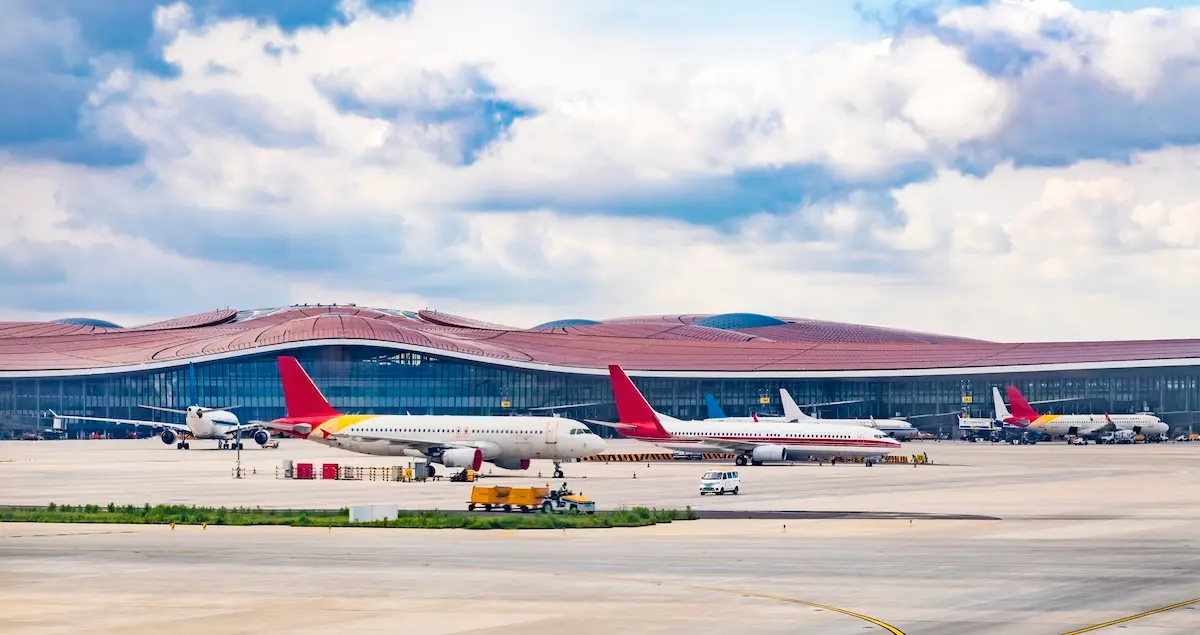
Daxing offers world-class facilities designed to make your time in the terminal productive and relaxing.
Under 4 hours: Stay airside and explore the terminal. Visit the five traditional Chinese garden courtyards located at the ends of each concourse, sample local teas, or relax in an airside lounge.
4–8 hours: Consider a lounge or transit hotel rather than leaving the airport. Book a private room at Aerotel Beijing inside the terminal (accessible from 1F/2F) to shower, nap, and recharge without leaving the airport grounds.
8+ hours: If you're eligible to enter China and have sufficient buffer before your onward flight, consider heading into Beijing to visit iconic sights like Tiananmen Square, the Temple of Heaven, or the Forbidden City.
Airport lounges
China Southern VIP Lounges: Located on Level 3 and Level 4, these flagship lounges offer extensive hot buffets, private sleeping pods, shower suites, and quiet business centers.
China Eastern Lounges: Found on Level 3, featuring refined dining, tea tasting bars, and ergonomic relaxation zones.
East Pacific Passenger Lounge: An independent lounge option on Level 3 for international departing passengers, accessible via lounge pass programs or direct entry fees.
Dining and restaurants at Beijing Daxing Airport
Daxing's dining scene spans everything from century-old Beijing roast duck institutions on the upper dining mezzanine to quick-casual noodle counters and international coffee houses.
Quanjude Roast Duck: Positioned on the Level 5 dining mezzanine, this historic culinary brand lets you enjoy traditional wood-fired Peking duck with panoramic views overlooking the central departure atrium.
Boutique DaDong: Located on Level 2 airside, offering a refined, contemporary take on non-greasy roast duck and modern artistic Chinese cuisine.
Qing-Feng Steamed Dumpling Shop: A popular local staple found on the lower terminal floors, perfect for a fast, affordable meal of traditional baozi steamed buns and warm rice porridge.
Xi Bei & Western Mahua: Located across the domestic departure levels, serving comforting regional Chinese dishes like Northwestern hand-pulled noodles, lamb kebabs, and authentic yogurt.
Coffee & Fast Casual: International and local coffee spots are situated throughout all concourses, including Starbucks, Luckin Coffee, McDonald's, and KFC for rapid bites before boarding.
Shops at Daxing Airport
The shopping concourses at Daxing operate like a luxury shopping destination, bringing together top international fashion houses, major duty-free operators, and historic Chinese heritage brands.
China Duty Free Group & Lagardère Travel Retail: Operating massive airside retail spaces in both domestic and international departure zones, these duty-free specialists offer competitive pricing on global cosmetics, skincare, perfumes, and premium spirits.
International Luxury Houses: High-end designers run standalone boutiques right in the central departure atrium, including Louis Vuitton, Gucci, Hermès, Cartier, Moncler, and Coach.
Swiss Timepieces & Fine Jewelry: Dedicated watch and jewelry boutiques throughout the airside wings feature iconic brands such as Longines, Omega, and Tiffany & Co.
Chinese Cultural Gifts & Heritage Brands: If you're looking for authentic local travel gifts, check out the Palace Museum cultural gift shop for Forbidden City souvenirs, Tong Ren Tang for traditional wellness gifts, or specialized boutiques selling premium Hangzhou silk and authentic Chinese teas.
Wi-Fi and digital services
Free high-speed Wi-Fi is available throughout the terminal under the network name BDIA-FREE-WIFI. International travelers can authenticate via SMS or by scanning their passport at self-service Wi-Fi kiosks located across the main concourses.
Because access to some international websites and apps is restricted in mainland China, travelers who rely on specific services should check their connectivity arrangements before departure.
Insider tips for Beijing Daxing Airport
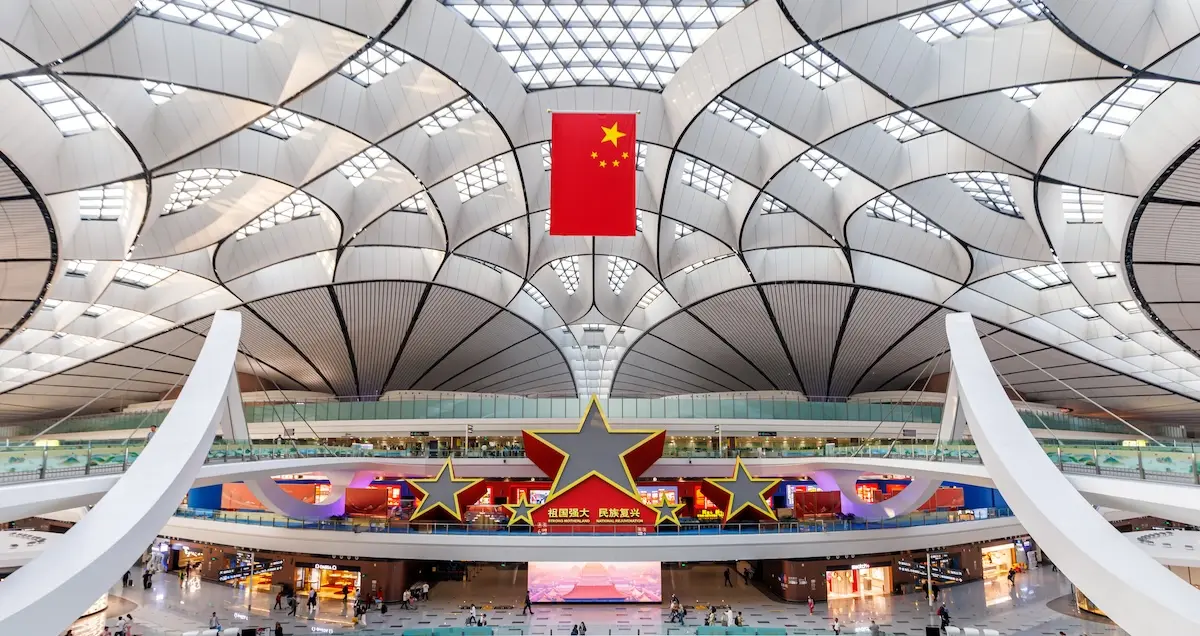
Navigating one of the world's largest single-building air terminals becomes entirely stress-free when you know its unique layout rules, technological shortcuts, and hidden amenities.
The design advantage: Don't let the terminal's vast size intimidate you. Because of the airport's unique starfish design, walking from the central departure atrium on Level 3 or Level 4 to the very furthest gate at the tip of any concourse takes just a few minutes on foot. You will never need to board an inter-terminal shuttle train just to reach your departure lounge.
Follow your bag in real time: Daxing has upgraded its arrival baggage information system to show the progress of checked luggage from unloading to the carousel, including estimated arrival times and baggage-belt information. A QR code can also provide carousel details for your flight, making the arrival process easier to navigate.
Early check-in at B1 subway level: If you arrive at the airport via the Daxing Airport Express subway, you don't necessarily have to ride the elevators all the way up to the Level 4 departures hall. Domestic travelers on select airlines can drop their checked bags and collect boarding passes right at the check-in counters on Basement Level 1 (B1) before heading straight through security.
Smoking policy: Smoking and vaping are prohibited inside the terminal. If you need to smoke before your flight, use the designated outdoor areas before passing through security. Once you're airside, you won't be able to rely on indoor smoking rooms.
If you’ve found our Beijing Daxing Airport guide useful, our guide to new airports to travel to next will offer inspiration on the world's most impressive modern terminals for future trips through other global hubs.
The smoothest way to leave Daxing Airport
Daxing may be one of the world's most impressive airports, but after a long flight, navigating trains, luggage, and Beijing's busy roads is rarely the part of the journey you want to think about.
For a more seamless arrival, booking a private Beijing airport transfer means you can step out of the terminal and into a comfortable vehicle without waiting for a taxi or navigating public transport with your luggage. Your professional chauffeur tracks your flight, meets you at arrivals, assists with your bags, and takes you directly to your hotel, home, or business destination.
Whether you're visiting Beijing for business, staying for a few days, or simply passing through on a longer journey, pre-arranging your ground transportation lets you start the next part of your trip with one less thing to worry about.
About the author

John Schärges
John Schärges is an internationally published journalist and award-winning copywriter with 15 years of experience, which includes covering global tourism events and serving as an editor for travel guides. He brings his passion for different cultures and over a decade of living abroad to his writing for Blacklane.